Is It Too Late to Invest in the NASDAQ?
Financial Bubble or Not?
For most people, talking about the NASDAQ means talking about the tech giants that dominate global indices, and they've made headlines for extraordinary stock market gains. We're looking at a 30% increase in 2024—numbers that make every investor dream.
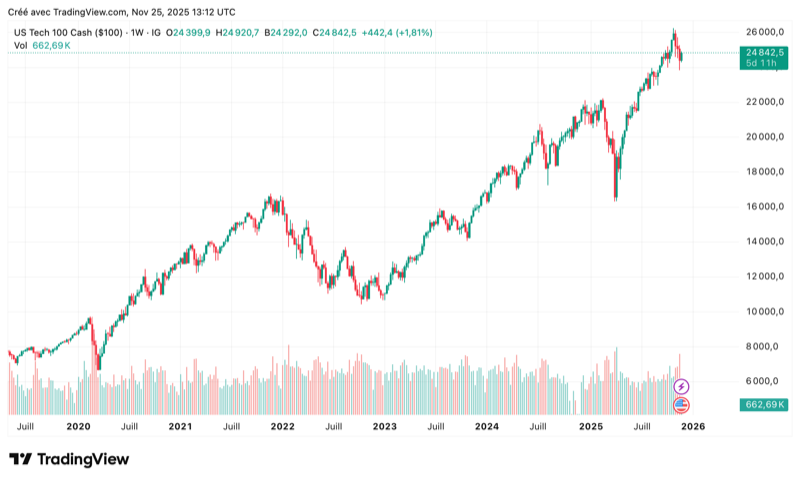
But as with every expansion phase, investors start asking: are we in a speculative bubble?
To answer this, I'm looking at the two most famous bubbles of the 2000s—the dot-com crash and the 2008 housing crisis—because they shared one thing: fragile or nonexistent fundamentals.
-
In 2000, during the internet bubble, many companies had no customers, no products to sell, yet were trading at absurd valuations.
-
In 2008, it was loans handed out recklessly with massive risk baked in.
So it's fair to ask whether today's tech boom is built on something real or pure speculation.
Artificial Intelligence: Mirage or Real Economic Engine?
We're in a period of hypergrowth and hyper-investment in AI. The biggest NASDAQ players—Nvidia, Alphabet, Meta, Microsoft—are pouring in amounts of capital never seen before. We're talking hundreds of billions. They're dead serious when it comes to R&D and building infrastructure (massive data centers the size of small cities):
-
Google: $75-90 billion annually in CAPEX
-
Meta: $60-65 billion
-
Microsoft: over $100 billion cumulative for AI
-
Nvidia: global data center expansion
-
xAI: supercluster with hundreds of thousands of GPUs
Real products are being sold: Google's Gemini 3, their latest intelligent chatbot, is ultra-performant and useful—just to name one product.
This is concrete: their cash reserves are growing alongside their investments.
We're talking hundreds, even thousands of data centers being built. Infrastructure on a massive scale, with serious energy requirements.
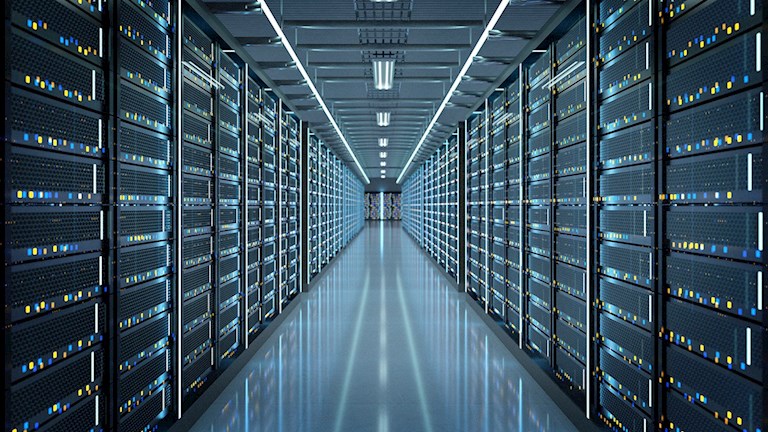
The energy sector will be massively impacted by these investments, with data centers consuming 500 megawatts of power—0.01% of total U.S. electricity consumption. And that's just one facility; there will be even larger ones in the future.
Remember: energy is the economic engine of every country in the world. It determines whether a nation moves forward or stagnates.
Government projects are in the works. France's Macron announced plans to invest €2 billion for the next "French ChatGPT"—laughable compared to the $600 billion Project Stargate announced by Donald Trump, not to mention the GPU war between China and the U.S.
Existing geopolitical tensions are intensifying. Coalitions are forming between the "Magnificent Seven" and emerging powerhouse states, like Nvidia and xAI (Elon Musk's company) partnering with Saudi Arabia to build massive data centers.
As Facebook founder Mark Zuckerberg puts it:
"AI will be the most important technology, the one that will enable the most new products, innovations, and value creation in all of history."
https://twitter.com/vision_ia/status/1993241292969513428?s=20
Investing in artificial intelligence means investing in the (currently long-term) trend, and smart investors generally invest either in emerging trends or the current dominant trend.
David Sacks on X (formerly Twitter)
According to today's Wall Street Journal, AI-related investments account for half of GDP growth. A reversal could trigger a recession. We can't afford to pull back.
Yes, artificial intelligence is real. This isn't some startup with cooked books—it's the emergence of a transformative technology that will revolutionize how we live, like the rise of home robotics.
Tesla aims to become a global leader in robotics with their Optimus robot. Nvidia is developing their Omniverse, a fully digital world where robots could visualize virtually recreated spaces (factories, homes, etc.) to learn how to interact with our physical world. Products will be sold en masse to the global population.
Why Invest in the NASDAQ?
Simple: the world's biggest players are American (not counting Chinese companies, but this article focuses on the NASDAQ). Among investors, it's unanimous: you need exposure to the U.S. economy. If you want a portfolio that at least tracks market performance, you need to invest in the trend—and that trend is in the United States.
No signs of exhaustion suggesting a potential crash are appearing. Without getting too deep into the details, liquidity is about to flow into U.S. markets, as suggested by the President of the New York Federal Reserve.
Remember: what drives modern financial markets is these massive inflows of capital.
So, Should You Invest in the NASDAQ?
Yes. Allocating part of your portfolio to the flagship index of the 2000s is a smart move. We're not big fans of diversification (at least not excessive diversification), but having some exposure to the NASDAQ ensures you're positioned in emerging technologies.
Modern investing has changed. If Google's stock doubles in 6 months, it's because the market allows it—just like the other tech giants. You need to stay medium/long-term and accept slightly elevated risk. The times allow it.
We're not talking about leverage or day trading—we're talking about hyper economic growth and being able to profit from it.
However, it's crucial to remember that "what goes up must come down," or at least experience significant correction phases. Economic cycles exist, and even the best-performing markets are subject to volatility. You must stay vigilant, because while investing in the NASDAQ is promising, it carries higher risks that require constant monitoring and acceptance of fluctuations.
You need to adapt to this new environment where everything moves faster and our economies can now benefit—but always with acute awareness of the risks and the need for heightened vigilance when market reversals occur.
FAQ
What's the difference between today's NASDAQ and the 2000 and 2008 bubbles?
Unlike the 2000 dot-com bubble and the 2008 housing crisis, today's NASDAQ rests on solid fundamentals. In 2000, companies had no customers or concrete products, while today's tech giants generate real revenue and sell functional products like Google's Gemini 3. Their massive AI investments are backed by growing cash reserves and tangible infrastructure projects.
How much are NASDAQ giants investing in artificial intelligence?
AI investments have reached historic levels: Google is investing $75-90 billion annually in infrastructure spending, Meta $60-65 billion, while Microsoft has surpassed $100 billion cumulative. Nvidia and xAI are also building data center superclusters with hundreds of thousands of GPUs. These amounts translate into real infrastructure and commercialized products.
Does artificial intelligence represent a real investment opportunity?
AI currently represents a long-term investment trend supported by concrete projects and government backing. Data centers under construction will require massive energy needs (500 megawatts per center), creating opportunities in the energy sector. Mark Zuckerberg calls AI "the most important technology in all of history," and geopolitical tensions over GPUs confirm its strategic importance.
Why did the NASDAQ gain 30% in 2024?
This surge is primarily explained by the dominance of tech stocks and their massive investments in artificial intelligence. NASDAQ companies aren't just speculating: they're building colossal physical infrastructure, developing marketable products, and generating growing revenues. This growth is based on solid economic fundamentals rather than mere speculative euphoria.