How to Buy Crypto Without KYC: Best Platforms in 2026
Why Use No-KYC Exchanges?
-
✅ Personal Data Security: You avoid entrusting your identity documents (passport, selfies) to third-party servers that can be hacked.
-
✅ Financial Privacy: You break the direct link between your bank account and your digital assets, protecting your privacy from institutions.
-
✅ Instant Access: No waiting period for manual account validation; you can invest and trade immediately.
-
✅ Digital Sovereignty: You remain the sole controller of your information, in line with Bitcoin's original decentralization philosophy.
-
✅ Financial Inclusion: Market access is open to everyone, without administrative or geographic barriers tied to your civil status.
In a financial landscape where surveillance is the norm, investing and buying crypto without KYC stands as an essential alternative for those who want to preserve their digital sovereignty.
We've selected and tested tools that allow you to trade cryptocurrencies discreetly, without the burden of submitting personal documents.
Whether you're a beginner investor or a seasoned no-KYC trading veteran, this guide provides the keys to invest and exchange your assets with confidence.
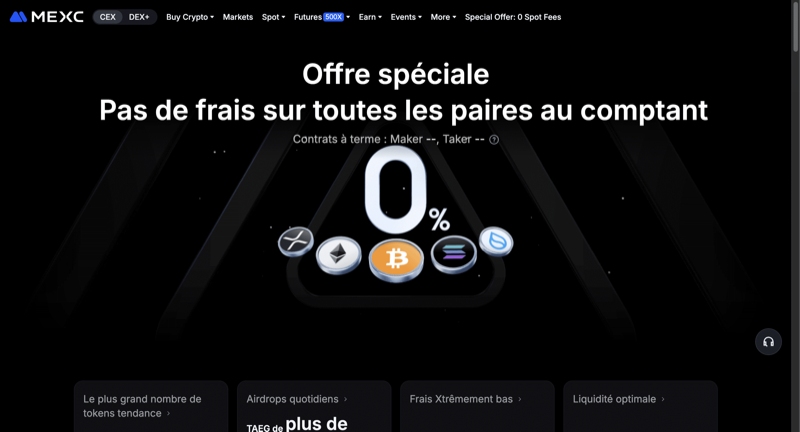
MEXC
If you're hunting for rare gems or freshly launched altcoins, MEXC is one of the must-visit destinations. It's now one of the world's largest volume exchanges for no-KYC trading.
-
✅ Extremely low trading fees (often 0% on spot).
-
✅ High daily withdrawal limits without verification.
-
✅ Very smooth and comprehensive mobile app.
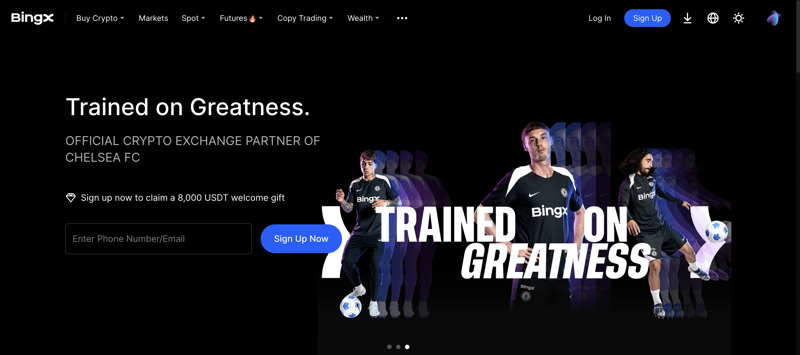
BingX
BingX has established itself as a solid alternative for those who want to trade with leverage or copy expert strategies, all while maintaining discretion.
-
✅ Ideal for margin trading and futures contracts.
-
✅ High-performing Copy-Trading function to follow the pros.
-
✅ No KYC required for standard features.
-
✅ Often generous welcome bonuses for new users.
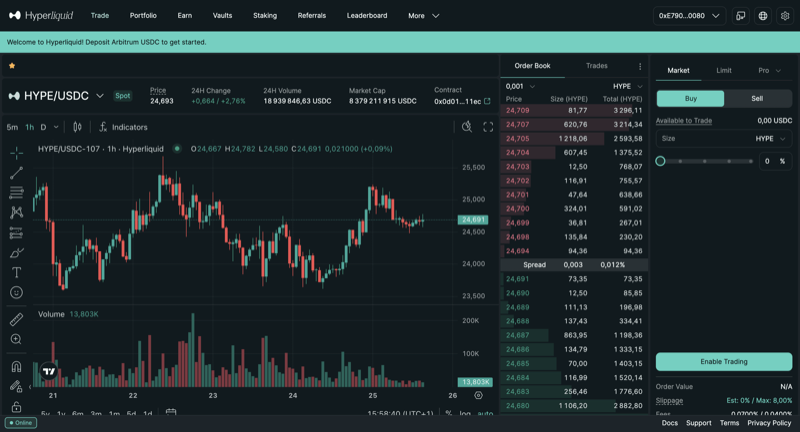
Hyperliquid
Here, we enter a different realm. Hyperliquid isn't a site where you create an account—it's a protocol you connect to with your own wallet (MetaMask, Rabby).
-
✅ Total anonymity: no email, just your public address.
-
✅ Self-custody: you remain the sole master of your funds.
-
✅ Perpetual contract trading with instant execution.
-
✅ Rapidly expanding DeFi ecosystem (potential airdrop opportunities).
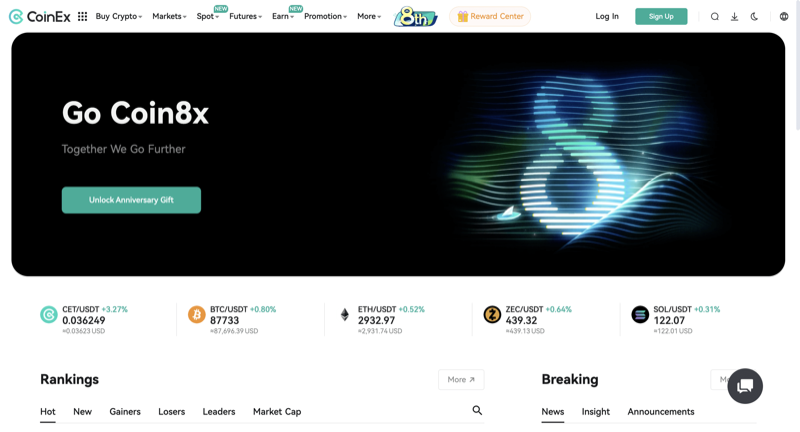
CoinEx: A Simple, Straightforward Interface Without Verification
For buying crypto without KYC, CoinEx stands out for its simplicity and efficiency. The platform gets straight to the point, without unnecessary frills.
-
✅ Ultra-fast account creation (email only).
-
✅ Intuitive, clean interface, perfect for beginners.
-
✅ Direct access to major assets without restrictions.
-
✅ Very competitive fees on small volumes.
Bisq: The Sovereignty Stronghold (Software)
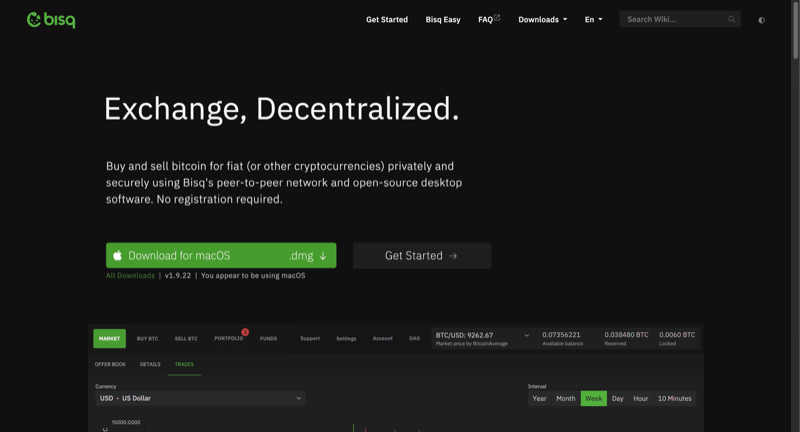
We're stepping outside the typical web platform framework here. Bisq is decentralized software that transforms your computer into a private marketplace.
-
✅ Complete decentralization (no central server).
-
✅ Absolute privacy (integrated Tor connection).
-
✅ Security through escrow deposits.
-
✅ Wide choice of payment methods (wire transfers, cash, etc.).
What is KYC?
Simply put, KYC (Know Your Customer) is an identity verification process imposed on digital asset service providers.
Under pressure from European and American regulations, crypto platforms have a legal obligation to collect your data to combat money laundering and terrorist financing.
Concretely, when you sign up, you must provide standard personal information: full name, address, and date of birth. These declarations must be backed by official documents such as a passport, ID card, or proof of residence.
While these measures aim to clean up the ecosystem, they represent a major obstacle for users who want to protect their anonymity and privacy.
Increasingly Intrusive Methods
Today, simply sending a photo ID is no longer enough.
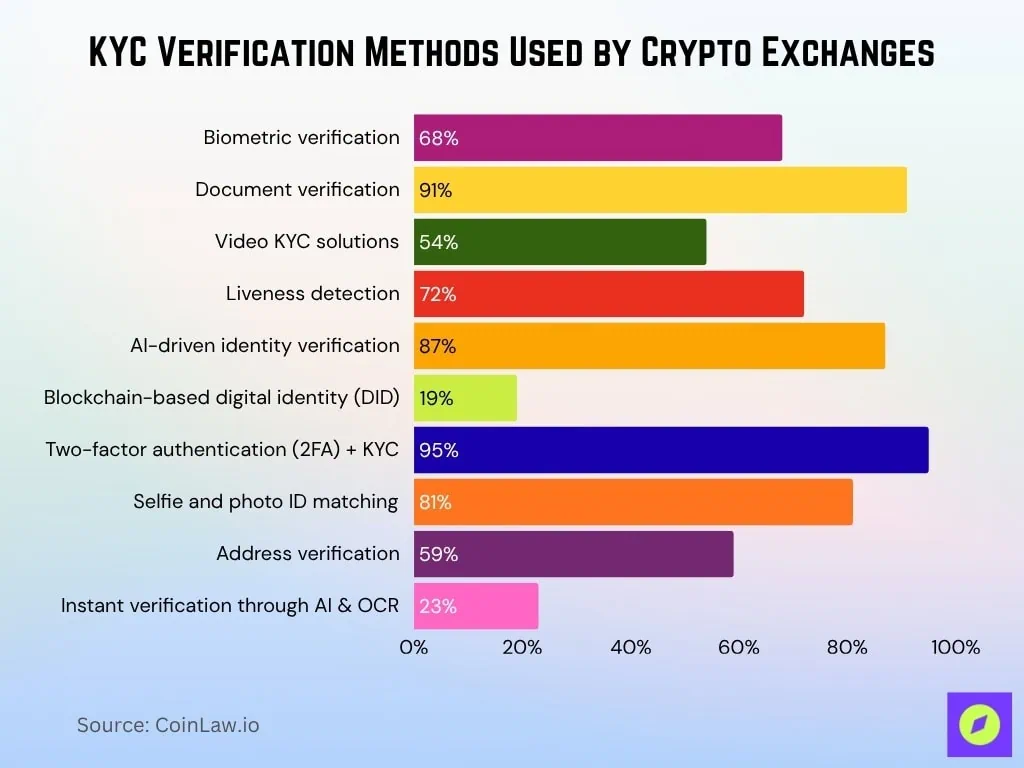
As we can see from the chart above, exchange requirements have become particularly advanced, even intrusive.
The numbers speak for themselves: 91% of platforms require strict document verification, but it's the rise of biometric technologies that's concerning.
Now, 82% of services use liveness detection and 68% employ biometric verification.
Over half of platforms (54%) even impose live video KYC solutions.
This trend shows that to invest or trade on these sites, you must agree to entrust unique biological data to third parties, reinforcing the appeal of turning to no-KYC trading solutions.
Regulatory Framework: What Exactly Are MiCA and VASP Registration?
To grasp the stakes of no-KYC trading in 2026, it's essential to understand the legislative mechanisms governing digital assets. Two pillars currently structure the French and European market: VASP registration and the MiCA regulation.

VASP Registration: The French Requirement
The VASP (Virtual Asset Service Provider) status is registration issued by the French Financial Markets Authority (AMF), equivalent to FinCEN registration in the US or FCA authorization in the UK.
This framework imposes strict obligations on platforms operating in French territory regarding anti-money laundering and counter-terrorist financing (AML-CFT).
Any broker or exchange holding this status has a legal obligation to verify users' identities.
The MiCA Regulation: European Harmonization
The MiCA regulation (Markets in Crypto-Assets) represents a historic turning point for the ecosystem across the European Union, similar in scope to how the SEC and CFTC regulate crypto markets in the United States.
Its objective is to harmonize market rules for all member states.
-
Impact on KYC: MiCA generalizes transparency requirements. Most platforms wishing to maintain access to the European market must now comply with rigorous identification standards.
-
Consequences for Investors: It's precisely this increased regulatory pressure that progressively restricts access to services without verification. To invest or trade while preserving privacy, investors must now turn to structures operating outside this jurisdiction or favor decentralized protocols.
2026 Situation Summary
VASP status forms the local foundation, while MiCA now defines the European architecture.
This legislative tightening explains why most major players have abandoned anonymity in favor of compliance.
Our guide makes complete sense here: identifying solutions that still allow you to exercise your right to privacy while remaining within a lawful personal use framework.
Are No-KYC Exchanges Legal?
Using no-KYC exchanges is perfectly legal, however in France and Europe, the situation is rapidly evolving.
We're moving from a "gray zone" to an era of heightened surveillance, driven by the new European MiCA regulation.
The Ultimate Alternative: DEXs (Decentralized Exchanges) for 100% Anonymous No-KYC Trading
If you're looking to completely escape the very concept of a user account, DEXs (Decentralized Exchanges) are the most radical solution.
Unlike centralized platforms, these protocols operate without intermediaries—you simply connect your wallet (like MetaMask or Phantom) and interact directly with the blockchain.

For simple swaps, leaders like Uniswap let you instantly swap thousands of tokens without ever providing any personal information.
For more experienced investors, next-generation platforms like Hyperliquid are revolutionizing the sector by offering perpetual contract trading (perps) with leverage.
Peer-to-Peer (P2P): The Power of Blockchain Serving Anonymity
For investors who refuse any compromise, P2P trading is the most robust method. Here, you don't exchange with a company, but directly with another individual. If this method is considered "safe," it's not because we trust the other party, but because we trust smart contracts and the power of blockchain.
Why is P2P Secure?
Security relies on the Escrow (custody) system. When a transaction is launched, the seller's bitcoins are locked by the protocol in a secure address.
They're only released to the buyer once the bank payment is confirmed.
If a dispute arises, the protocol intervenes to settle it. You don't depend on your counterparty's good faith, but on the mathematical rigor of the network.

Here are the three pillars of P2P in 2026:
-
Bisq: This is the reference software, completely decentralized and open-source. It doesn't run on a website but on your own computer via the Tor network. To ensure security, Bisq uses a BTC deposit system for both buyer and seller, making any fraud attempt economically suicidal.
-
RoboSats: An ultra-fast alternative using the Lightning Network. The experience is simplified: you generate an anonymous robot and exchange assets in minutes. Security is ensured by "HODL invoices," a technical feat that locks funds on the Lightning Network until the exchange is finalized.
-
Hodl Hodl: Unlike Bisq, this is a non-custodial web platform. It uses a multi-signature (2-of-3) system. This means neither Hodl Hodl nor the seller can seize your funds alone. The money is locked on the blockchain and requires two out of three signatures to be released, guaranteeing total user control.
Wire Transfer or Credit Card: The Strategic Choice
It's crucial to note that these solutions favor bank transfers (SEPA, wire transfers) over credit cards. Why?
Because wire transfers benefit from a certain "neutrality": your bank sees a transfer to an individual but cannot identify the purchase nature (no merchant code).
It's the same channel used for the world's most complex financial flows; by using it, you slip into a system whose opacity is, ironically, protected by those who designed it.
We've merged and structured your points to create a coherent and impactful section. Here's a logical organization in three pillars, ranging from pure technique to real legal consequences.
Security and Risks: What You Need to Know Before Starting
Navigating the "No-KYC" universe offers unparalleled freedom but demands iron discipline. Here's how we structure your security management and understanding of associated risks.
Technical Security: Mastering Your Assets
No-KYC purchases are just the entry point. Real security depends on your ability to become your own bank.
-
Wallet as Transit Zone: Never let your assets stagnate on an exchange. Use a non-custodial wallet (where only you hold the private keys) as a central hub before navigating to different blockchains (Ethereum, Solana, Bitcoin). This breaks the direct link with the purchase platform.
-
Trading vs Storage: An exchange, even without KYC, is not a vault. It's a transit tool. Once your trading operations are complete, your tokens must absolutely return to a cold wallet to avoid any risk of account freezing or platform bankruptcy.
Liquidity Risks: The "Cash-out" Reality
We need to be clear: in 2026, "sovereign" money is easy to acquire but difficult to reinject into the real French economy.
-
Major Purchase Impossibility: Without certified source of funds (KYC), you cannot buy real estate or vehicles in France. This money remains confined to the digital economy or long-term savings.
-
OTC (Over-the-Counter) Danger: To convert your assets to Euros without a bank, you depend on the hand-to-hand market. Without the safety net of an escrow contract (like on Bisq), you expose yourself to theft or scam risks during direct transfers with third parties.
Total Responsibility: Freedom Without a Safety Net
No-KYC is a contract with yourself: you gain anonymity but lose all legal protection.
-
Anonymous Therefore Nonexistent: Since you haven't disclosed your identity, you don't officially exist to the platform. In case of hacking or dispute, you can never legally prove the funds belong to you.
-
Outside Jurisdiction and Without Recourse: Most of these exchanges operate from zones like Seychelles or Bermuda. They're not registered with the AMF, SEC, or FCA. In case of bankruptcy or platform scam (exit scam), no European or American regulator can intervene to reimburse you.
-
Code Irreversibility: Unlike the traditional banking system, there's no "cancel" button. An address error or loss of your recovery phrase (Seed Phrase) means permanent loss of your assets. Code is the only law, and it doesn't forgive.
FAQ
What exactly is KYC and why don't some platforms require it?
KYC stands for "Know Your Customer" and refers to the identity verification procedure imposed by traditional financial regulations. Some crypto platforms choose not to impose it to respect Bitcoin's principles of decentralization and privacy, or because they operate in less strict jurisdictions. This absence of KYC allows users to trade immediately without submitting personal documents.
What are the risks of buying crypto without identity verification?
The main risks concern the security of your funds rather than the legal aspect: some no-KYC platforms may be less regulated and potentially less reliable. It's crucial to check the platform's reputation, start with small amounts, and use a personal wallet to store your assets rather than leaving them on the exchange. In your jurisdiction, also check your tax obligations, as the absence of KYC doesn't exempt you from declaring your gains.
Can you really trade with leverage without KYC in 2026?
Yes, platforms like BingX and Hyperliquid offer leveraged trading without mandatory identity verification. BingX allows access to margin trading via simple email registration, while Hyperliquid, being a decentralized protocol, doesn't even require an account: you connect directly with your wallet. Be warned though, leverage amplifies both gains and losses and requires rigorous risk management.
What's the difference between a no-KYC exchange and a DEX like Hyperliquid?
A centralized no-KYC exchange (like MEXC or BingX) maintains control of your funds while they're on the platform, even if it doesn't request your documents. A DEX (decentralized exchange) like Hyperliquid works differently: you connect with your own wallet and retain your private keys—no one else has access to your funds. DEXs offer maximum sovereignty but require better technical understanding of wallet management.
Are there withdrawal limits on no-KYC crypto platforms?
Yes, most no-KYC exchanges impose daily or monthly withdrawal caps for unverified accounts, typically between 1 and 10 BTC per day depending on the platform. MEXC stands out by authorizing relatively high daily withdrawals without verification. If you plan to handle large volumes, it may be necessary to spread your operations across multiple platforms or accept completing KYC to increase your limits.
Are no-KYC platforms legal in France and Europe?
Using these platforms is generally not illegal in itself, but they operate in a regulatory gray area. MiCA regulation in Europe pushes toward more transparency, and many platforms will need to adapt or withdraw from the European market. As a French user, you remain responsible for declaring your transactions and capital gains to tax authorities, even if the platform doesn't collect your data. Consulting a crypto-specialized tax advisor for your personal situation is recommended.
Which no-KYC platform should I choose to start in 2026?
For beginners, CoinEx represents the best compromise thanks to its intuitive interface and ease of use, requiring only an email address to start. If you're looking for maximum altcoin choices with minimal fees, MEXC is more suitable despite a slightly more complex interface. Once comfortable, you can explore decentralized solutions like Hyperliquid for total sovereignty over your funds, but this requires mastering non-custodial wallet usage.